8
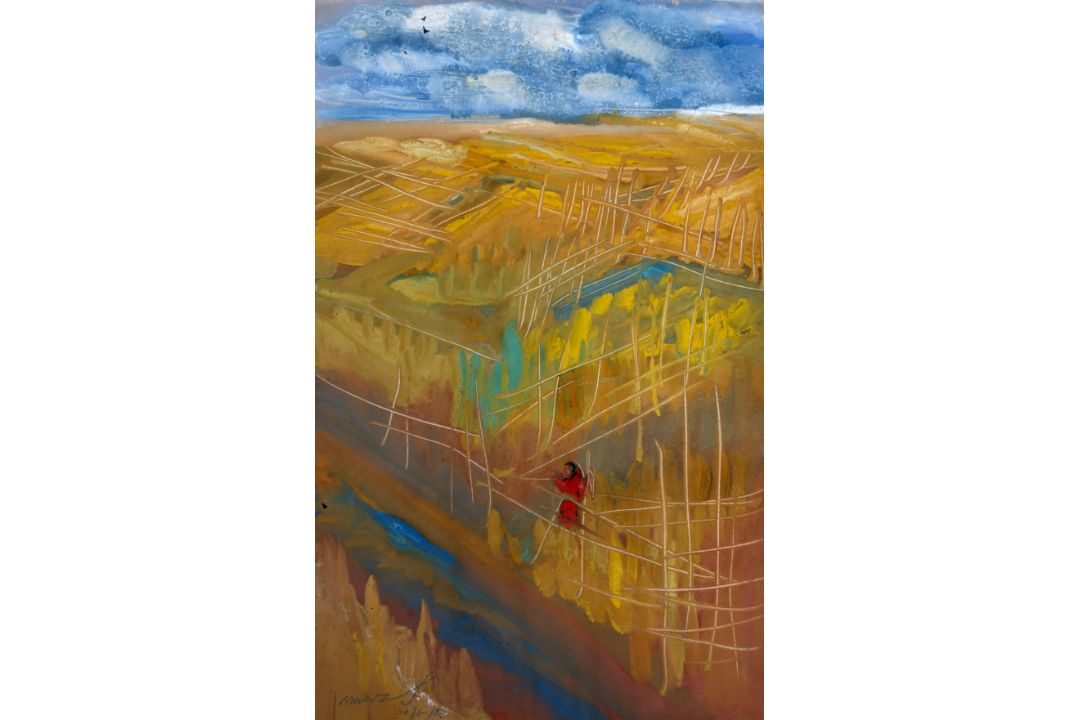
GOPAL GHOSE (1913 - 1980) - UNTITLED (Landscape of a Farm)
1/2


Description
Watercolour on Paper
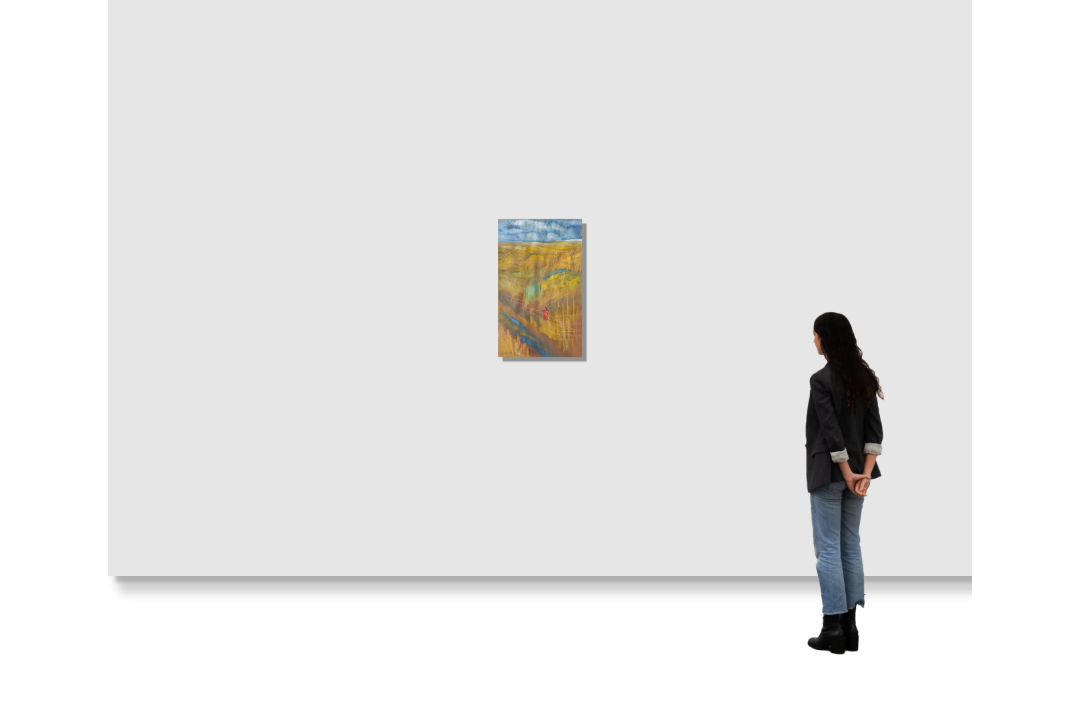
23 x 14 In.
Signed & Dated Bottom Left
Dated - 10/08/52
Gopal Ghose is remembered as one of the strongest colourists of post-Independence India.
Trained first at the Maharaja’s College of Art in Jaipur and then at the Government School of Art & Craft in Madras, he absorbed two very different academic lineages before moving decisively beyond both. In the 1940s he became a founder member of the Calcutta Group, aligning himself with artists who argued that modern Indian art had to be “international and interdependent,” in dialogue with global modernism rather than confined to inherited styles.
The 1940s were also the decade in which Ghose confronted history head-on. He travelled through Bengal in the years of famine, riots and wartime scarcity, sketching famine victims, demonstrations, and the violence of 1946 in a taut, nervous line. Some of these images were published in the CPI journal Swadhin. At the same time, he was already pushing his watercolours towards near-abstraction: twisted trees, burning horizons and agitated skies in which colour and brushstroke carry as much meaning as motif.
From the 1950s onward, Ghose turned increasingly to landscape, flowers, birds and foliage, usually on paper, in watercolour, gouache or pastel. He travelled widely – from Shimla and Allahabad to Banaras and the countryside around Calcutta – with sketchbooks and a small kit of materials. Former students remembered him cycling out with them at dawn, bread and bananas in a bag, and demonstrating in a few rapid strokes how form, line and wash could condense a whole scene. Teachers and peers alike noted his ability to combine an almost calligraphic economy of mark with a saturated, luminous colour range that had few parallels in India at the time.
Late works from the 1960s and 70s often reduce landscape to rhythm: bands of colour, quivering clusters of strokes, birds rendered as a few decisive marks on an atmospheric field. Critics such as W.G. Archer described him as a painter with the sensibility of a poet.
The current lot is a sensitive example of Ghose’s enduring pursuit of chromatic abstraction, situating itself firmly within the vocabulary that made him one of Bengal’s most lyrical landscape painters.
Auction Details
Shipping
T&Cs & Important Info
Ask seller a question
Watercolour on Paper
23 x 14 In.
Signed & Dated Bottom Left
Dated - 10/08/52
Gopal Ghose is remembered as one of the strongest colourists of post-Independence India.
Trained first at the Maharaja’s College of Art in Jaipur and then at the Government School of Art & Craft in Madras, he absorbed two very different academic lineages before moving decisively beyond both. In the 1940s he became a founder member of the Calcutta Group, aligning himself with artists who argued that modern Indian art had to be “international and interdependent,” in dialogue with global modernism rather than confined to inherited styles.
The 1940s were also the decade in which Ghose confronted history head-on. He travelled through Bengal in the years of famine, riots and wartime scarcity, sketching famine victims, demonstrations, and the violence of 1946 in a taut, nervous line. Some of these images were published in the CPI journal Swadhin. At the same time, he was already pushing his watercolours towards near-abstraction: twisted trees, burning horizons and agitated skies in which colour and brushstroke carry as much meaning as motif.
From the 1950s onward, Ghose turned increasingly to landscape, flowers, birds and foliage, usually on paper, in watercolour, gouache or pastel. He travelled widely – from Shimla and Allahabad to Banaras and the countryside around Calcutta – with sketchbooks and a small kit of materials. Former students remembered him cycling out with them at dawn, bread and bananas in a bag, and demonstrating in a few rapid strokes how form, line and wash could condense a whole scene. Teachers and peers alike noted his ability to combine an almost calligraphic economy of mark with a saturated, luminous colour range that had few parallels in India at the time.
Late works from the 1960s and 70s often reduce landscape to rhythm: bands of colour, quivering clusters of strokes, birds rendered as a few decisive marks on an atmospheric field. Critics such as W.G. Archer described him as a painter with the sensibility of a poet.
The current lot is a sensitive example of Ghose’s enduring pursuit of chromatic abstraction, situating itself firmly within the vocabulary that made him one of Bengal’s most lyrical landscape painters.
Collector's Edition Winter 2025
Ends from
Venue Address
PRINSEPS, 1215/C, One Lodha Place,
Senapati Bapat Marg,
Lower Parel
Mumbai
400013
India
For PRINSEPS delivery information please telephone 9820000802.
Important Information
=====================================================
BidSpotter Customer Service Support Department
Have a question pertaining to the bidding process?
Visit our Frequently Asked Questions!
You can also start a live chat with a Bidspotter Support Representative by selecting Live Chat at the top of Bidspotter.com. More information on our chat system can be found by clicking here.
Customer Support Hours:
- Monday – Friday, 8:00 AM ET – 8:00 PM ET
Email: support@bidspotter.com
Office: 253-858-6777 Toll Free: 866-597-2437